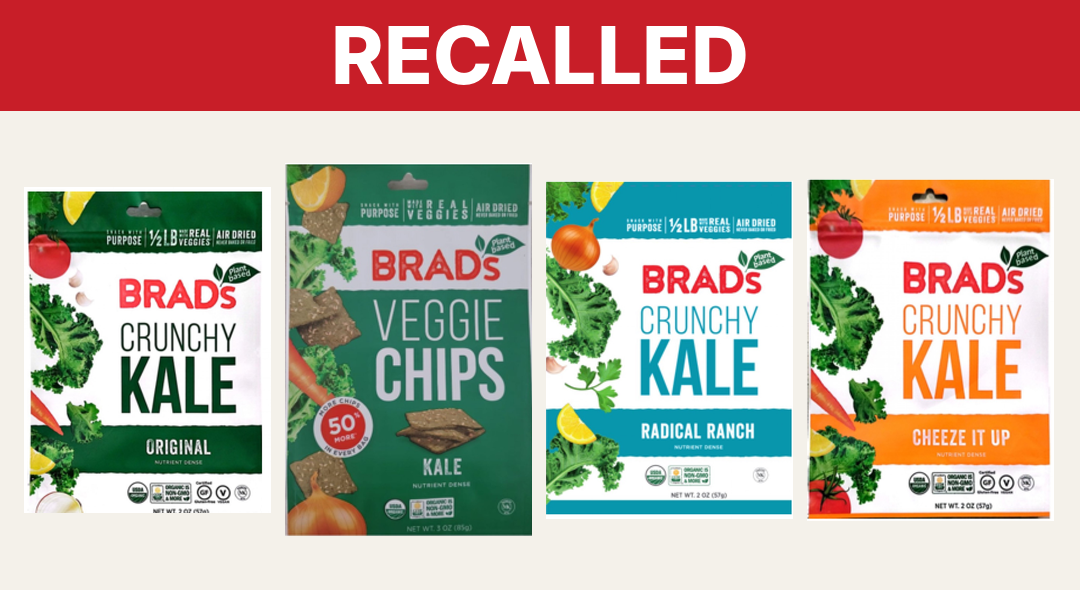
The Missing Digits Between Your Food and a Recall

We’ve all been there: you’re holding a cereal box, comparing its barcode with a recall notice. The numbers almost match but one has an extra zero and the other has fewer digits. Now you’re counting numbers when you were supposed to be making breakfast.
We recently added FDA and USDA food recall information to Canopy and added them to our upcoming pantry scanner app. To be frank, it was much harder than we expected. To limit legal risk, we started with a cautious rule: match only exact UPC to recalls. It sounded simple.
Reader, one does not simply match a UPC.
What is a UPC?
A UPC, or Universal Product Code, is like a special ID that identifies a product. The common UPC-A barcode holds a 12-digit number that stores scan it to look up the item and its price.
The parts of a UPC
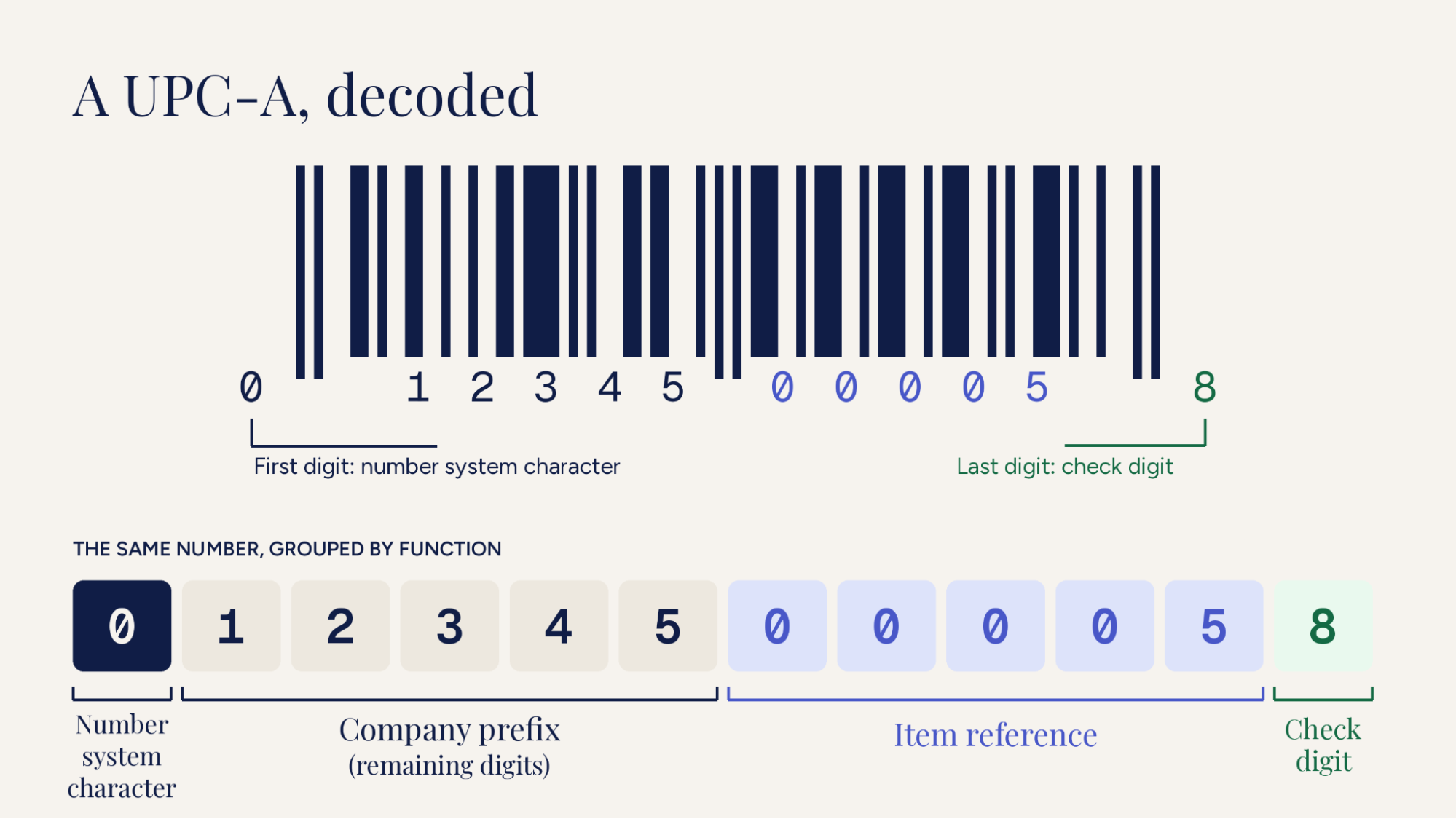
| Part | What it does | Example |
|---|---|---|
| Number system character | The first digit that identifies what type of product it is. | 0, 1, 6–9: usually everyday retail products. 2: store-weighed items. 3: certain medicines. 4: internal store codes. |
| Company prefix (remaining digits) | Combines with the first digit to identify the company that registered the prefix. A company can have several, which is very confusing. | For a cereal company like Kellogg’s, a sample prefix could be 0 + 12345 = 012345. |
| Item reference | Identifies a specific product, size, or flavor. | 00005: a 12 oz box of cornflakes. |
| Check digit | A number that comes from an algorithmic check that helps catch typing or scanning errors. | See Image below for the math example |
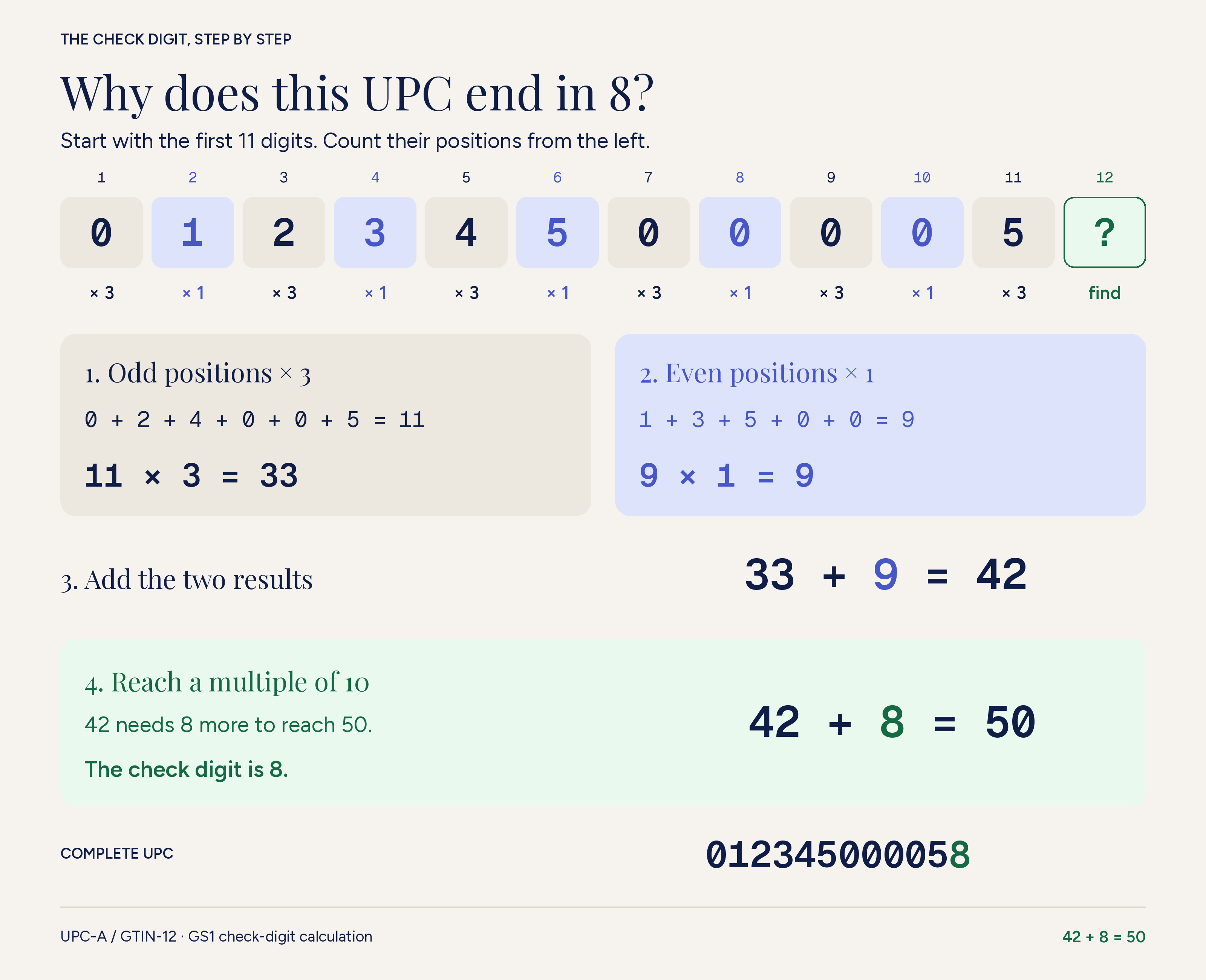
Even though they serve different functionality all digits are required for the entire UPC identifier. Prefix lengths vary, and store-weighed or internal store codes can follow different layouts, but we don’t have to get into that today.
The check digit can catch many mistakes, but it cannot catch every error or tell you which digit is wrong. This number is crucial as numbers can get jumbled as they pass from one system to another.
Why the numbers change
Imagine a food company builds a recall list from scanned packages. Steps 1–5 follow one hypothetical UPC; the last two rows show other valid formats you might see.
| Handoff | Number shown or stored | What happens and why |
|---|---|---|
| 1. Package to scanner | 012345000058 — 12 digits | The scanner reads the full barcode correctly. |
| 2. Scanner to inventory system | 01234500005 — 11 digits | Some scanner settings omit the first or last digit. Here, the final check digit, 8, is left out. |
| 3. Inventory export to spreadsheet | 1234500005 — 10 digits | Excel treats the code as a number and drops the first 0. |
| 4. Spreadsheet to recall database | 1234500005 — 10 digits | The shortened value is imported as a “UPC” without checking its format. |
| 5. Package to shopper’s app | 012345000058 — 12 digits | The shopper scans the original box. An exact search fails to match the shortened recall record. |
| Other format: small barcode | 01234558 — 8 digits | For eligible codes, UPC-E compresses certain zeros. Software must use fixed rules to restore them. |
| Other format: 14-digit field | 00012345000058 — 14 digits | Some systems use 14 digits, so they add two zeros at the front. The product identifier stays the same. |
In this example, the barcode scanned, the spreadsheet opened, and the import succeeded. But the number lost two digits along the way.
Some changes are errors; others are valid formats. Both can break an exact match. And 11 digits alone cannot tell you whether the first or last digit is missing.
Why this matters for recalls
In January 2025, Quaker recalled certain two-pound boxes of Pearl Milling Company Original Pancake & Waffle Mix because they could contain milk that wasn’t listed on the label. The notice on the FDA website listed the UPC as 30000 65040—just ten digits.
The notice also gave the package size and BBD SEP 13 25 P code. It did not explain the missing digits or report that they caused anyone to miss the recall.
When an app says “No recall found,” that could mean only that the numbers didn’t match. A failed search can look like reassurance.
Even a matching UPC may only be the first step. A UPC usually identifies the product; a lot code identifies a batch made together. A recall may affect only some batches. The FDA explains why both matter.
Check the package size, lot code, and date against the notice, and follow its instructions. A failed barcode search does not prove the food is safe.
How we’re improving recall checks at Canopy
These are responsibilities for teams building recall tools, including us at Canopy. We already bring FDA and USDA notices together. As we develop our upcoming pantry scanner, we’re working on three parts of better matching:
- Keep every digit. Save UPCs as text, including zeros, and keep the original code.
- Match across known formats. Convert valid UPC formats to the same form before comparing them. Don’t guess missing digits.
- Make uncertainty clear. Separate a possible product match from a confirmed recall match, and show which lot code, date, or other details still need checking.
Our goal is to catch relevant recalls that an exact text match could miss, so we can alert people more accurately without treating incomplete information as certainty.
Start your recall check with Canopy, then compare the notice’s lot code, date, and instructions with your package. We’re working through the barcode details so you can spend less time counting digits and more time making breakfast.
Ready to pool in? Open tests are waiting for backers right now.
Browse open tests →