Heavy metals in baby food: what the FDA covers
How FDA's action levels for heavy metals in baby food relate to health guidance, which foods they cover, and what isn’t covered.
Can you assume your child's diet falls within the health guidance for lead, arsenic, and cadmium based on the FDA's action levels for heavy metals in baby food?
Not entirely, for three reasons. FDA is building the levels one metal and one food category at a time. The levels cover only packaged food marketed for children under two, which isn't everything a baby might eat. And some of the levels themselves sit above what the health guidance alone would allow.
How health guidance is built
Health guidance for a metal starts with studies linking exposure to harm. For cadmium, FDA reviewed the scientific literature, identified kidney and bone effects as the most sensitive outcomes, and used a model to relate those effects to daily intake. The output is a toxicological reference value, which for cadmium is a range: 0.21 to 0.36 micrograms per kilogram of body weight per day. External experts peer reviewed it (FDA draft guidance on cadmium, October 2026).
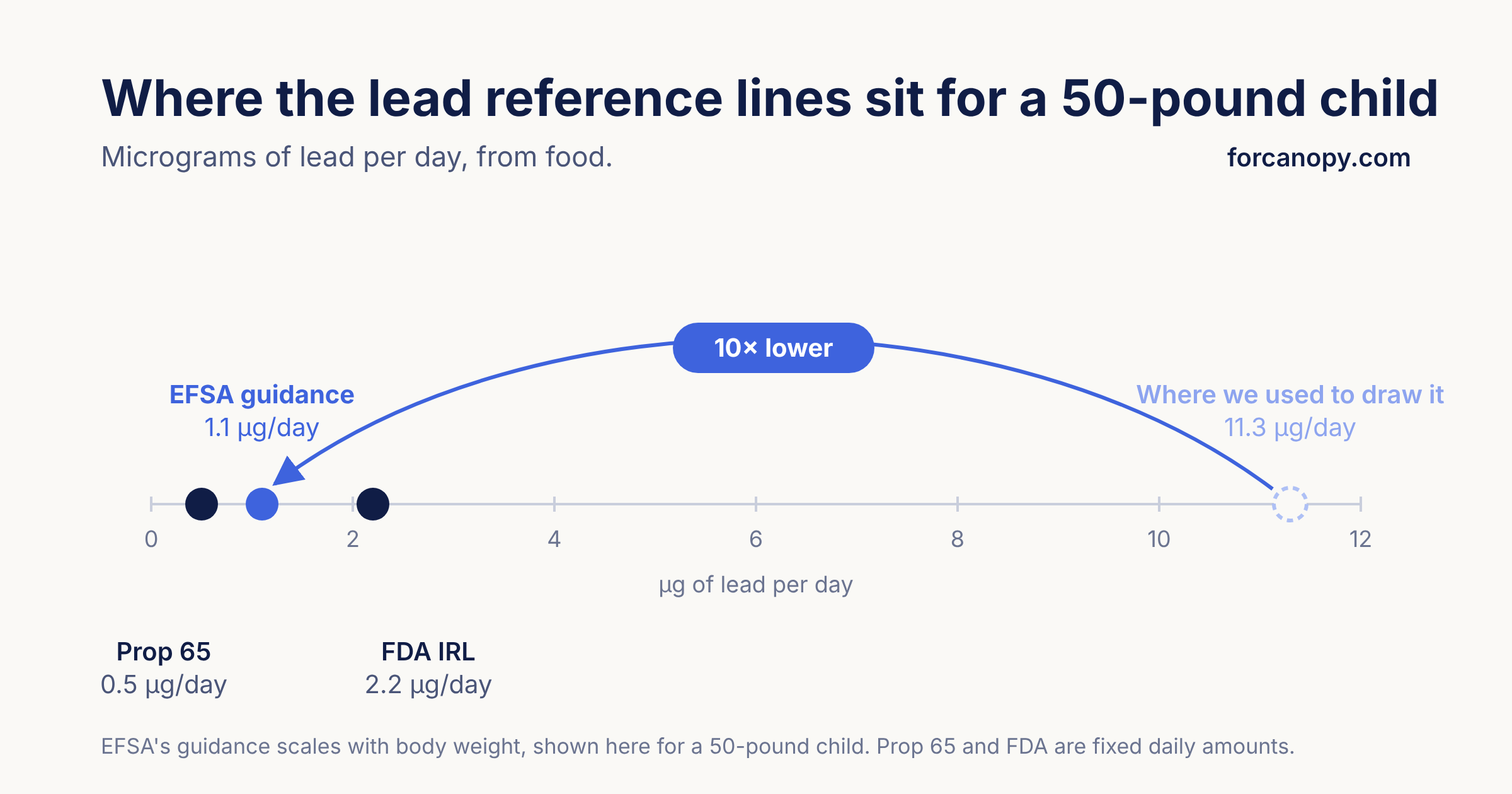
Reference values change as evidence improves. FDA lowered its interim reference level for lead in children's diets from 3 micrograms per day in 2018 to 2.2 in 2022, a drop of about 27%, to align with a revised CDC blood lead reference value (EDF Health, summarizing FDA's 2022 update).
Turning a reference value into a food level is a separate step. FDA works out how much of the metal a food category can contain before a child who eats a lot of that category would reach the reference value, then checks what share of products on the market already meet that level. For nutritious foods that run high in a metal, such as carrots, the level balances the health calculation against keeping the food available. The result is an action level, which is nonbinding guidance to industry (FDA draft guidance on cadmium).
Arsenic took a different route. FDA's 2020 level for inorganic arsenic in infant rice cereal draws on its risk assessment for rice, which estimates cancer risk and discusses non-cancer effects, including neurodevelopmental effects, qualitatively. It also draws on an analysis of what manufacturers can achieve (FDA supporting document, August 2020).
Where the levels stand
Lead: final since January 2025. 10 ppb for fruits, vegetables, mixtures, yogurts, custards, puddings and single-ingredient meats. 20 ppb for single-ingredient root vegetables and dry infant cereals (FDA final guidance on lead).
Cadmium: draft, issued October 22, 2026. 10 ppb for fruits, vegetables other than single-ingredient carrots, and mixtures. 20 ppb for yogurts, puddings and custards. 25 ppb for single-ingredient carrots and single-ingredient meats. 45 ppb for dry infant cereals (FDA draft guidance on cadmium).
Inorganic arsenic: final since August 2020 for infant rice cereal only, at 100 ppb. FDA has said it plans to propose levels for a wider set of baby foods (FDA Closer to Zero page).
In all of these, "baby food" means packaged food, such as jars, pouches, tubs and boxes, represented as being for children under two.
How the action levels compare with the reference value
Here is the arithmetic for a 10 kg child (about 22 lb). The cadmium reference range is 0.21 to 0.36 micrograms (µg) per kilogram of body weight per day, which is 2.1 to 3.6 µg a day for a 10 kg child. FDA sets its action levels to keep exposure below the low end of that range, so the table compares against 2.1 µg. The table shows the cadmium in one serving of each food category at FDA's proposed level, and what share of the 2.1 µg a day that is. A child may eat more than one serving a day, and servings of several foods that contain cadmium, so these shares add together across a day. Serving sizes are FDA's reference amounts for baby food (21 CFR 101.12): 110 g (3.9 oz) for fruits, vegetables, mixtures and carrots, and 15 g (0.5 oz) for dry infant cereal. These are Canopy's calculations from FDA's October 2026 draft guidance on cadmium.
| Food | Serving | FDA level | Cadmium | % of 2.1 µg/day |
|---|---|---|---|---|
| Fruits, vegetables, mixtures | 110 g | 10 ppb | 1.1 µg | 52% |
| Carrots, single-ingredient | 110 g | 25 ppb | 2.8 µg | 130% |
| Dry infant cereals | 15 g | 45 ppb | 0.68 µg | 32% |
Few products sit at the maximum of the proposed action levels, and FDA's own estimates suggest the levels lower exposure across the population. For lead, FDA estimates its final levels cut exposure at the 90th percentile by 19 to 29% depending on category (Hogan Lovells). For cadmium, it estimates 90th percentile exposure below 0.21 micrograms per kilogram per day with the proposed levels in place. That is an improvement, though it can't guarantee that an individual baby's exposure stays within the health guidance. FDA calculates exposure one food category at a time while a child eats from several, and the table above shows that a single serving of carrots at the proposed level is already 130% of the 2.1 µg a day. FDA describes the process as iterative and says it will revise levels as the science and data allow.
The foods with no level
FDA's cadmium draft excludes raw produce, homemade food, snack foods, infant formula and every beverage, including toddler drinks. FDA is still collecting data on grain-based snacks to decide whether a level is appropriate. A fruit pouch aimed at a general audience, a toddler snack, a puree made at home and a portion of the family's dinner all fall outside the definition.
The health guidance behind the levels concerns a child's total exposure to a metal, from every food. The action levels apply category by category, and only to packaged foods that meet the definition. FDA states that the levels are not meant to steer consumers' food choices, and recommends a varied, nutrient-dense diet.
Where Canopy fits
Canopy tests branded products and charts each result against the health guidance that exists for each metal, so you can see how a product compares for a child of a given weight. For lead, the chart shows Prop 65, FDA's interim reference level and EFSA. For cadmium, it shows Prop 65, EFSA and the low end of FDA's reference range, 0.21 micrograms per kilogram of body weight per day. For arsenic, it shows Prop 65 and EFSA. The chart recalculates for the body weight you enter. Benchmarks are explained at forcanopy.com/regulations.
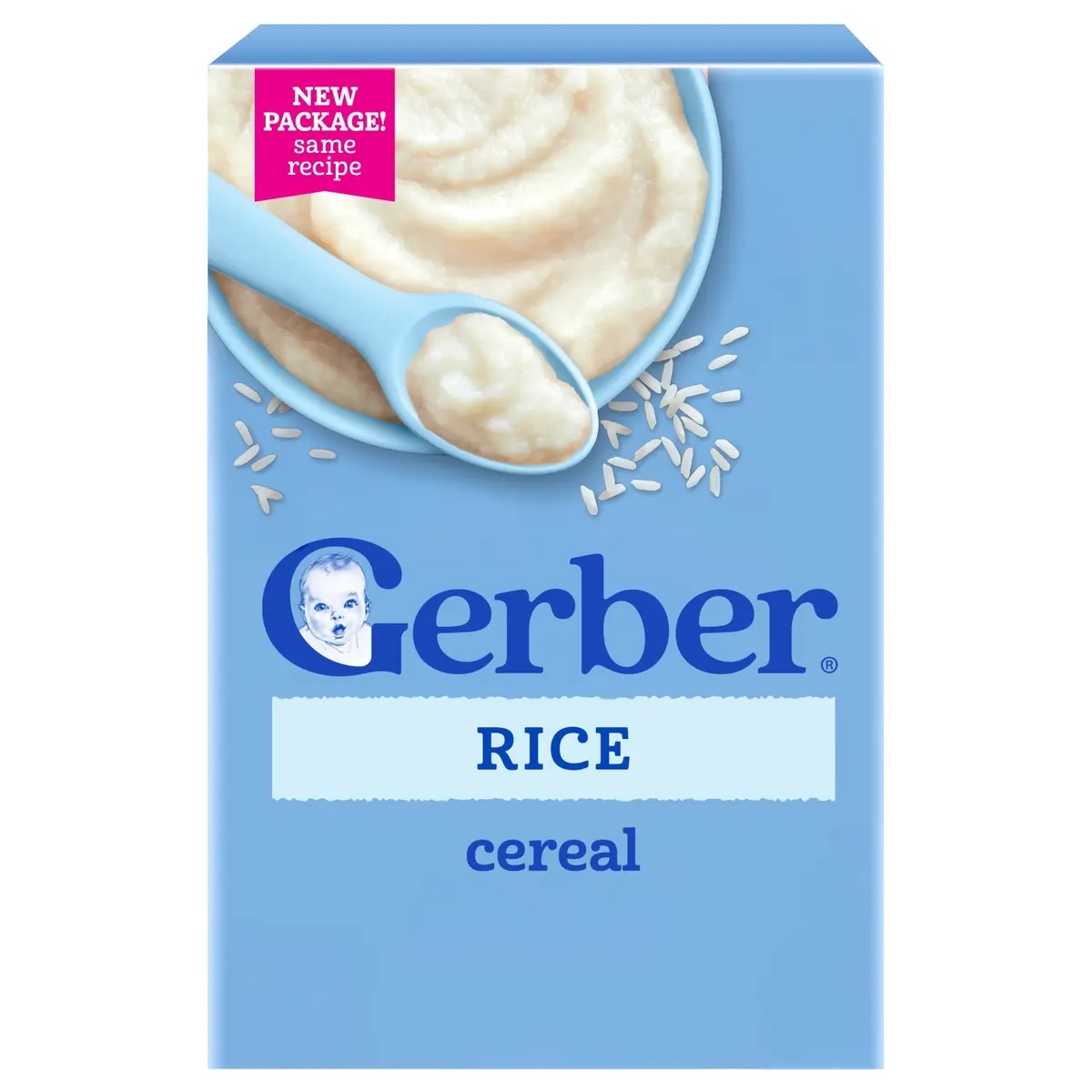
There is an open test request for Gerber Baby Cereal, Baby Rice Cereal, Baby Breakfast, Stage 1, 8 oz. It would be Canopy's first baby food test, a heavy metals panel for lead, arsenic, cadmium and mercury. FDA's action levels for lead, arsenic and (draft) cadmium all apply to this product. The test runs on one package of the product once enough people have pledged. Canopy's basic panel measures total arsenic, which makes any comparison with FDA's inorganic arsenic level conservative.
Pledge or share the Gerber test request with anyone you know who buys the same cereal. To ask for a test on any other product, start a request.
What this means for your choices
FDA's action levels are a second yardstick for a baby food result, next to the health guidance Canopy compares against. For the packaged baby foods they cover, the action levels are moving toward the health guidance, with lead final and cadmium in draft. For foods outside FDA's baby food definition, no action level applies yet, and FDA says it may add foods and categories as new information becomes available.
The cadmium draft is open for public comment through December 22, 2026, at regulations.gov under docket FDA-2025-D-4023. Anyone can submit a comment.
Ready to pool in? Open tests are waiting for backers right now.
Browse open tests →