What Are Contaminants in Food — and Why Aren't They on the Label?
Contaminants like heavy metals, PFAS, pesticides, and microplastics end up in your food but never appear on the label — and the only way to know they're there is to test. Here's why the gap exists and how Canopy's community-funded testing helps you choose products with lower contaminant levels.
You read ingredient lists. You compare nutrition panels. Maybe you even scan barcodes with an app. And you still don't know everything that's in your food.
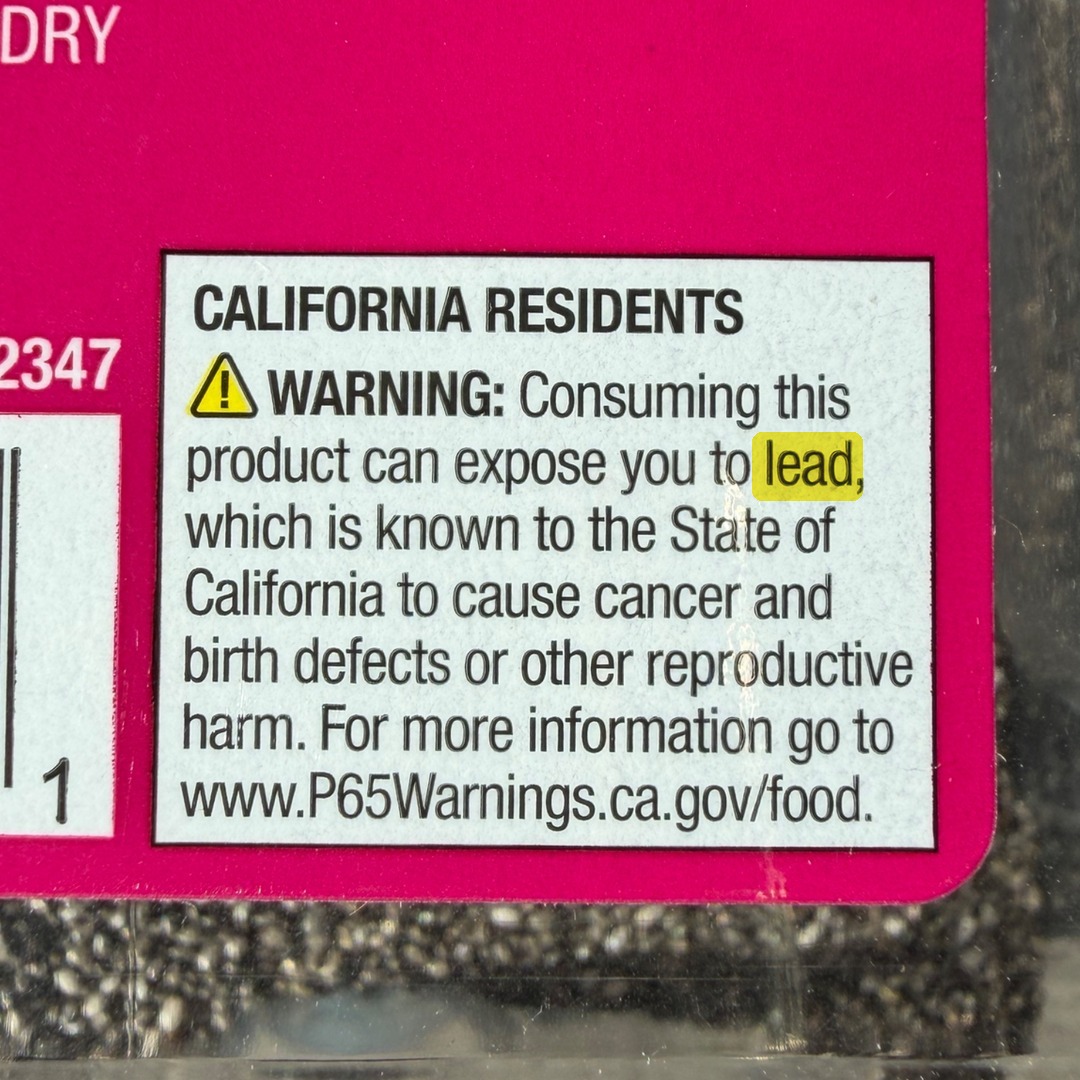
That's because the chemicals that aren't meant to be there — heavy metals, PFAS, pesticides and herbicides, plasticizers, microplastics — aren't listed on any label. They're contaminants: substances that end up in food not because someone added them, but because of how food is grown, processed, packaged, and stored. No barcode scanner can detect them. The only way to know if they're there is to test.
The health risks of long-term exposure to many of these contaminants are still not well understood. Research is ongoing, and for most contaminant-food combinations, there's no scientific consensus on what levels are safe. In the meantime, a reasonable approach is a simple one: limit your exposure where you can. To do that, you need data.
What counts as a contaminant?
A food contaminant is any substance present in food that wasn't intentionally added as an ingredient and that could potentially harm human health. Broadly, contaminants fall into two categories: biological and chemical.
Biological contaminants — bacteria, parasites, and viruses — are what most people think of as "food safety." They're the source of foodborne illness, and they're what cooking, refrigeration, and safe handling practices are designed to address.
Chemical contaminants are different. They can't be cooked away, washed off, or avoided through better handling. The major categories include:
- Heavy metals (lead, arsenic, cadmium, mercury) that accumulate in crops from soil and water
- PFAS, the "forever chemicals" used in food packaging and nonstick coatings that don't break down in the environment or your body
- Pesticide and herbicide residues that remain on crops even after washing
- Plasticizers and phthalates that leach into food from packaging and processing equipment
- Microplastics found in bottled water, sea salt, and dozens of other everyday foods
These aren't rare edge cases. They show up across product categories, and their levels vary dramatically from brand to brand and even between products with identical nutrition labels. Chemical contaminants are what Canopy tests for.
Why don't labels cover this?
Labels tell you what a manufacturer put into a product. Contaminants are what shouldn't be there, so they fall outside standard labeling requirements. The FDA sets limits for some contaminants in some foods, but enforcement is inconsistent, thresholds are often decades old, and for many contaminant-food combinations, no limits exist at all. The only way to verify what's in a product is laboratory testing, which individual consumers have a difficult time accessing.
That's the gap. And it's a solvable one. Contaminant levels are real, measurable, and vary significantly across brands. With access to testing data, consumers can confidently choose products with lower contaminant levels and avoid the ones with higher levels. Independent testing fills in the part of the picture that labels leave out, so you can make choices based on what's actually in the product, not just what's printed on the package.
How Canopy works
The premise is straightforward: a single lab test is expensive, but the information it produces is useful to anyone considering the same product. If enough people who share the same question split the cost of answering it, the per-person cost gets small and the data exists for all of them.
That works in three steps:
-
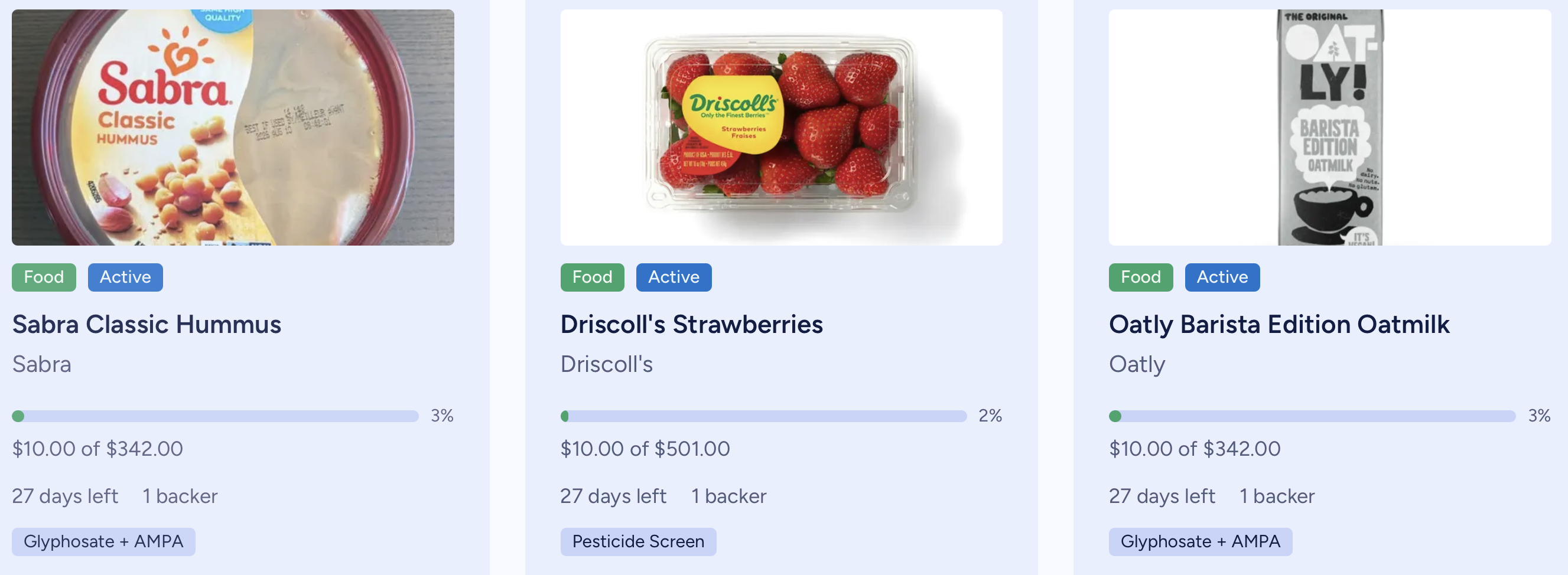
Someone proposes a product to test. You pick a food — for example, the cereal you feed your family, the protein powder you take every morning, the bottled water you keep on hand — and a contaminant you'd like it checked for. The request becomes a small fundraising campaign with a target based on the lab cost.
-
People chip in to fund it. A few friends who use the same product. Strangers who found the campaign because they were asking the same question. When the campaign hits its target, the testing happens.
Here's the part you have the most influence over. A test only happens once it's fully funded, and in the early days it usually gets there because the people who want the answer bring in others who want it too. If you propose or back a test, you probably already know who else buys the same thing — so passing the campaign along is often what gets it over the line.
-
The results go to the community. When the lab returns the numbers, they go to the people who funded the test and into our community dataset. Same methodology, same qualified labs, same level of detail across every product we've tested.
Every test is conducted by a qualified laboratory. Every result is real data, not a guess. Learn more and see what's currently in the dataset at forcanopy.com.
Ready to pool in? Open tests are waiting for backers right now.
Browse open tests →