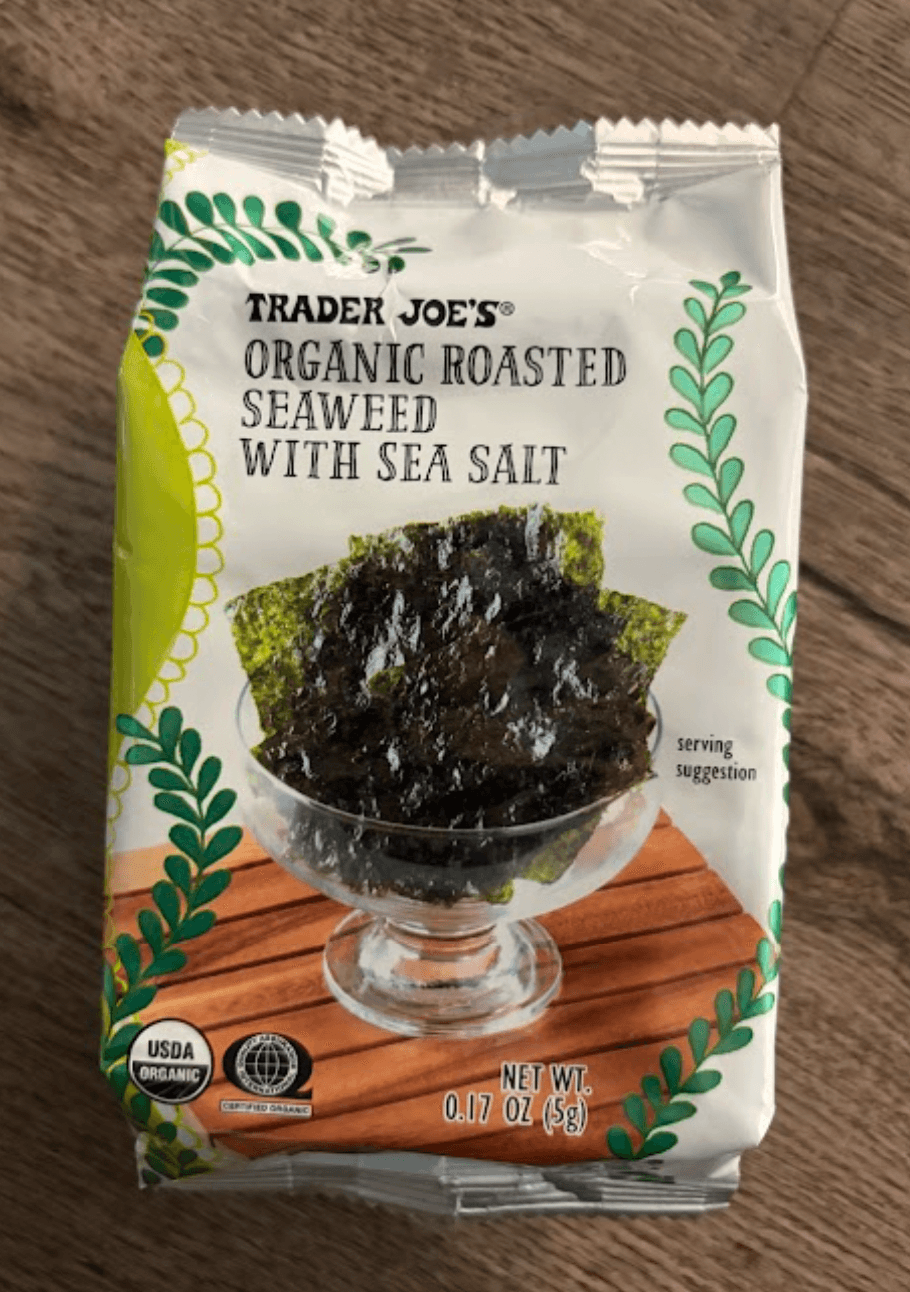
Organic Roasted Seaweed With Sea Salt
by Trader Joe's
Raised so far
Requested by
Kendra
67%
Funded
4
Backers
Expired
Status
Why test
Why test for Arsenic Speciation?
Goes beyond a total-arsenic measurement to separate arsenic into its distinct chemical forms ("species"). This matters because toxicity depends on which form is present: inorganic arsenic (arsenite and arsenate) is a known human carcinogen, while arsenobetaine — the "fish arsenic" common in seafood — is largely harmless and passes through the body. A standard heavy-metals panel reports only total arsenic, which can overstate risk; speciation reveals how much of the arsenic present is actually the inorganic kind. This test can be performed as a follow-up to the total-arsenic measurement in the Heavy Metals Panel.
Requester’s note
Product tested high for total arsenic, want to know how much of that is inorganic (the more toxic species).
— Kendra
More info · Arsenic Speciation
How the test is performed
The food sample is extracted into a liquid, then run through a system that pairs liquid chromatography with ICP-MS (HPLC-ICP-MS). The chromatography column separates the individual arsenic species by how quickly they travel through it, and the ICP-MS detector then measures the exact amount of each as it comes off the column — distinguishing toxic inorganic arsenic from harmless organic forms down to parts-per-billion levels.
Good foods to test
- Rice & rice cereal
- Rice-based baby food & infant cereal
- Brown rice syrup & sweeteners
- Fish & shellfish
- Seaweed & sea vegetables
- Apple & grape juice
- Protein & greens powders
4 people pledged $285.00 to back this test before it expired
Lindsey
Jul 30, 2026
Kendra
Jul 27, 2026
John
Jul 27, 2026
Kendra
Jul 11, 2026